Scale factor word problems with solutions help you figure out how sizes change between similar shapes like a blueprint and the building it represents, or a map and the real landscape. You’ll see them in math class, drafting projects, model-making, and even cooking when adjusting recipe portions. If you’ve ever mixed up whether to multiply or divide by the scale factor or misread “1 inch = 5 miles” as “5 inches = 1 mile” you’re not alone. These problems test both your understanding of ratios and your attention to units and direction (enlargement vs. reduction).
What does “scale factor” actually mean in a word problem?
The scale factor is a single number that tells you how much bigger or smaller one shape or measurement is compared to another. It’s always written as a ratio: new size ÷ original size. If a drawing uses a scale of 1:4, the scale factor is 4 when going from drawing to real life and ¼ when going from real life back to the drawing. Word problems usually give you one measurement and ask for the other, so recognizing which direction the scaling goes is half the battle.
How do you solve a typical scale factor word problem?
Start by identifying what’s given and what’s asked. Then write the relationship as a proportion or use multiplication directly. For example:
- A model car is built at a scale of 1:24. If the real car is 192 inches long, how long is the model?
→ Scale factor from real to model is 1/24. So 192 × (1/24) = 8 inches. - A map shows two towns 3.5 cm apart. The scale is 1 cm = 8 km. How far apart are they in reality?
→ Multiply: 3.5 × 8 = 28 km.
You don’t always need fractions sometimes writing the scale as a unit rate (like “1 cm = 8 km”) makes it easier to apply. Just be sure the units match before calculating.
Where do people commonly go wrong?
One frequent mistake is flipping the scale factor using 24 instead of 1/24 when finding a model size from a real object. Another is ignoring units: mixing centimeters and inches, or forgetting to convert km to meters if the answer needs meters. Also, some assume all scales are written “model : real,” but maps and blueprints sometimes reverse that order. Always check the wording: “1 inch represents 10 feet” means 1 inch → 10 feet, not the other way around.
What kinds of real-world situations use these problems?
Architects use scale factors when turning floor plans into full-size rooms. Gardeners scale up planting diagrams to fit their backyard. Teachers resize worksheets while keeping text legible this is where understanding dilation connects directly to practical layout work. Even resizing images on a screen involves the same math, just with pixels instead of inches. If you’ve ever printed a poster from a small file and wondered why things looked blurry, that’s a scale factor issue too.
How can you practice effectively?
Work through problems that mix measurement types (inches, feet, meters, km) and directions (finding original size from scaled version, and vice versa). Try sketching quick diagrams labeling “original” and “scaled” helps avoid reversal errors. A good next step is to try our worksheet focused on dilation fundamentals, which builds intuition before jumping into word problems. Once comfortable, move to real-world application exercises like map reading and blueprint interpretation.
Need more examples with step-by-step answers?
We’ve put together a set of scale factor word problems with solutions that walk through each calculation clearly no skipped steps, no jargon. Each solution highlights where students tend to trip up, like misreading “1:50” or forgetting to square the scale factor when comparing areas.
If you're designing printable math resources, consider using a clean, readable typeface like the font name to keep numbers and labels clear at any size.
Before moving on: Grab a ruler and a map (paper or digital), find two points, measure the distance, then use the map’s scale to calculate the real distance. Check your answer against a known source or better yet, verify it with a driving app. That small, real-world check builds confidence faster than any worksheet.
 Comparing Original and Scaled Dimensions
 Applying Scale Factors to Real-World Scenarios
 Mastering Dilation Through the Scale Factor Worksheet
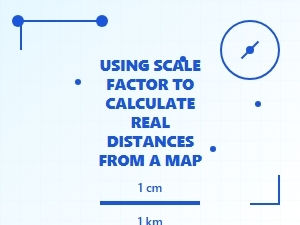 Using Scale Factor to Calculate Real Map Distances
 Working with Scale on a Map Worksheet
 Mastering Map Scale Factor Practice Problems